
Parts of a Home HVAC System: A Visual Guide
A forced-air HVAC system conditions air and moves it through supply and return pathways. Heating and cooling equipment varies by climate and building, but the following components are common in systems that combine a furnace or air handler with central air conditioning.
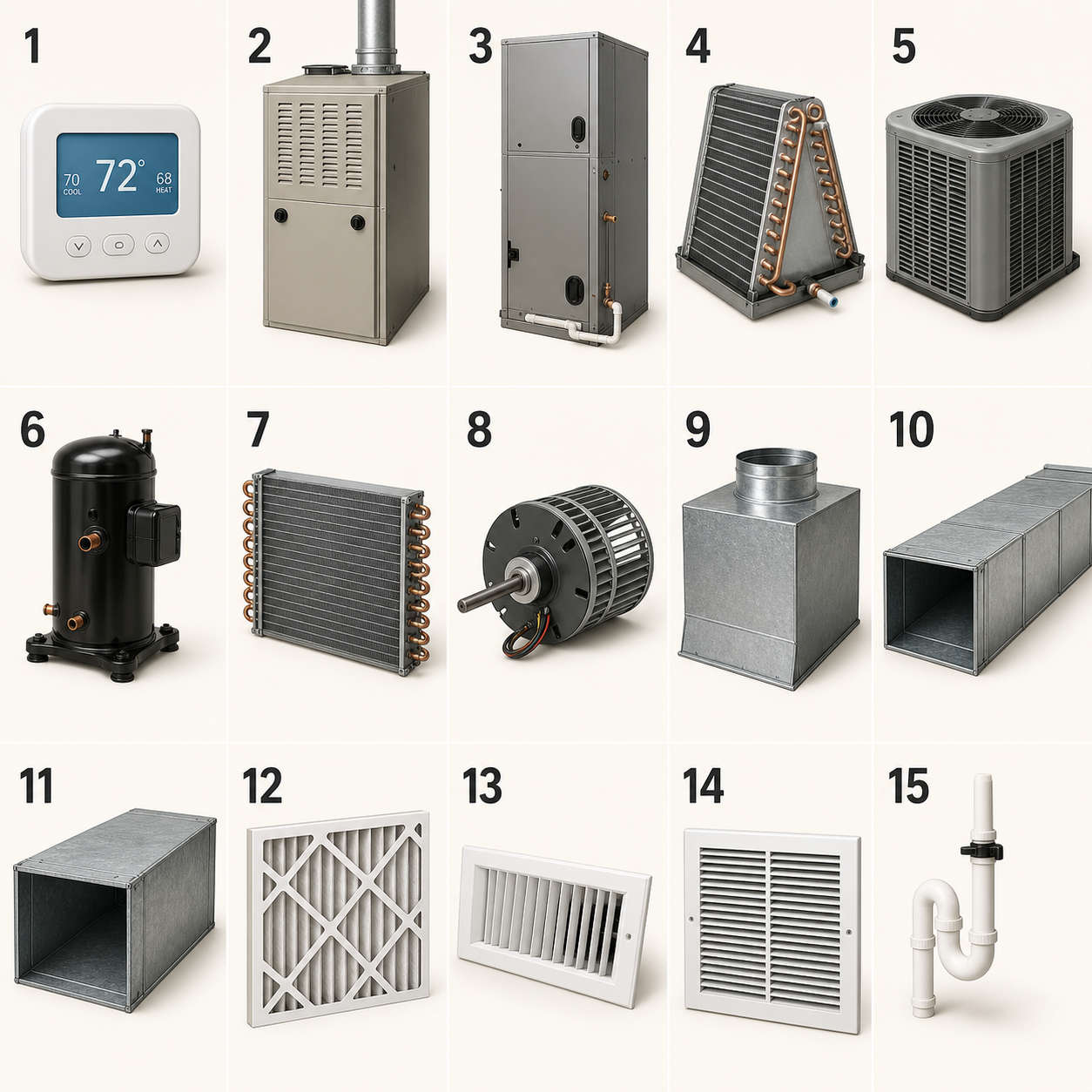
HVAC parts shown in the image
1. Thermostat
The thermostat measures room temperature and sends operating requests to the HVAC controls.
2. Furnace
A furnace produces heat and transfers it to moving air. Fuel-burning furnaces also require correct combustion air and venting.
3. Air handler
An air handler houses a blower and may contain an evaporator coil, electric heat elements, or other indoor components.
4. Evaporator coil
Cold refrigerant inside this indoor coil absorbs heat and moisture from the air during cooling.
5. Outdoor condensing unit
The outdoor cabinet contains the compressor, condenser coil, fan, controls, and protective enclosure.
6. Compressor
The compressor circulates refrigerant and raises its pressure. It is a sealed, electrically powered component requiring professional service.
7. Condenser coil
The outdoor coil releases heat from the refrigerant to the surrounding air.
8. Blower motor
The motor drives a fan wheel that moves air through the equipment and duct system.
9. Supply plenum
This chamber receives conditioned air from the equipment and distributes it into supply ducts.
10. Supply duct
Supply ducts carry conditioned air from the equipment toward rooms.
11. Return duct
Return ducts carry room air back to the system for filtering and conditioning.
12. Air filter
The filter captures particles before air reaches sensitive equipment. Size, airflow direction, and resistance must suit the system.
13. Supply register
A register delivers air to a room and usually includes adjustable louvers or a damper.
14. Return grille
A return grille covers a return opening and normally has no user-operated damper.
15. Condensate drain and trap
Cooling equipment produces water that must drain through an approved line. Some systems require a trap and overflow protection.
Airflow is a system
Closing many registers, installing an overly restrictive filter, blocking returns, or changing ductwork can affect pressure and equipment performance throughout the house. Low airflow, ice, water leakage, combustion odor, unusual electrical noise, or repeated shutdowns require professional diagnosis.
Refrigerant circuits, fuel-burning equipment, high-voltage wiring, combustion venting, and internal safety controls are not homeowner identification projects. Use qualified HVAC and electrical professionals.