
15 Common Bathroom Fixtures and Their Names
A bathroom contains more than a toilet and sink. Fixtures deliver water, collect wastewater, provide storage, move air, and support everyday tasks. This visual guide identifies 15 items you are likely to see in a residential bathroom.
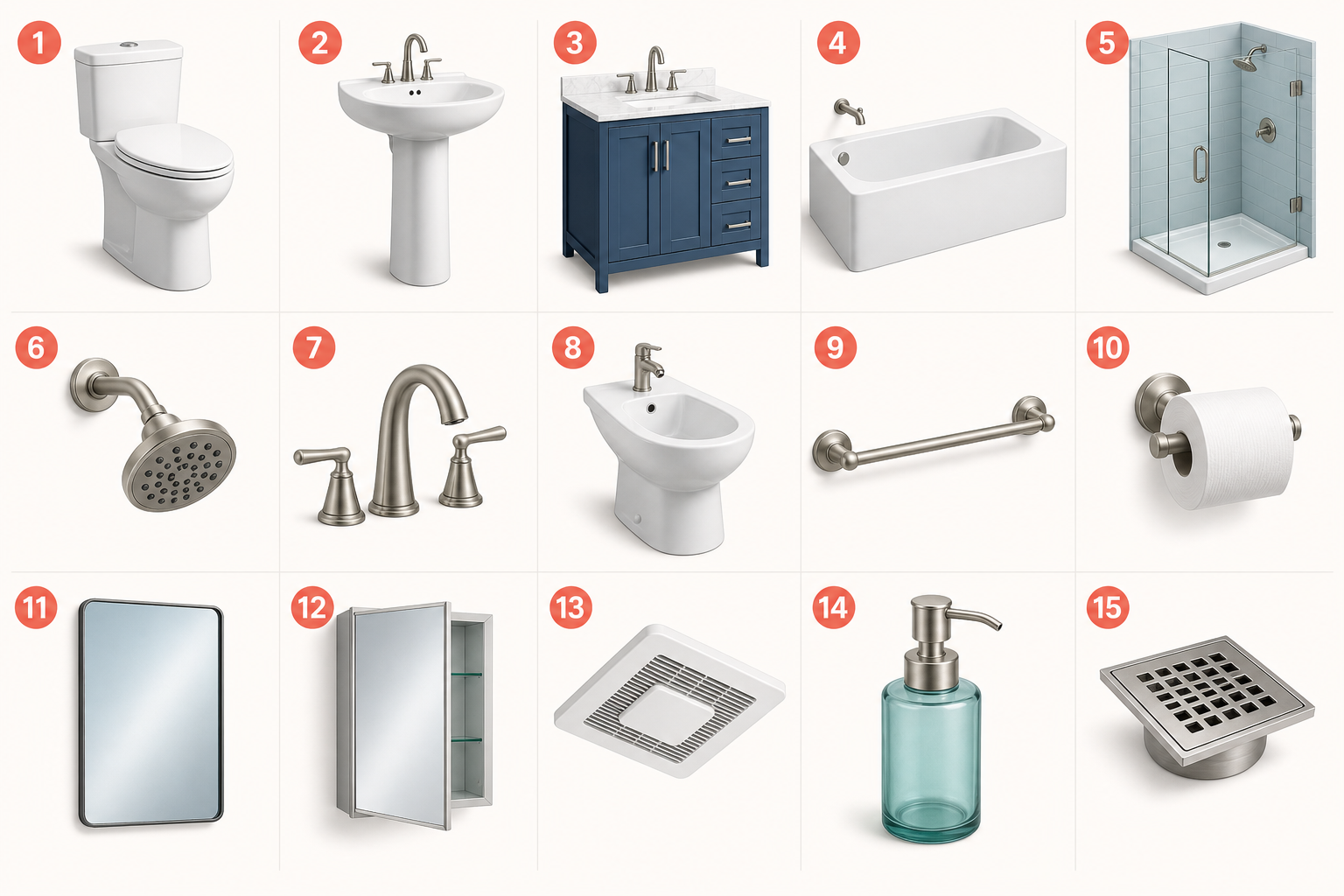
Fixtures shown in the image
1. Toilet
A toilet uses a water-filled bowl and flushing mechanism to carry waste into the drainage system. Common residential styles include two-piece, one-piece, and wall-hung models.
2. Pedestal sink
A pedestal sink has a basin supported by a narrow pedestal. It saves visual space but usually provides little or no storage.
3. Bathroom vanity
A vanity combines a sink, countertop, and storage cabinet. Its width, plumbing location, and wall clearance are important when choosing a replacement.
4. Bathtub
A bathtub is a deep basin designed for bathing. Alcove, freestanding, corner, and drop-in tubs use different mounting and drain arrangements.
5. Shower enclosure
A shower enclosure contains water within a dedicated shower area. It may use framed, semi-frameless, or frameless glass around a shower base.
6. Showerhead
A showerhead shapes and distributes water from the shower arm. Fixed, handheld, rain-style, and dual showerheads produce different spray patterns.
7. Bathroom faucet
The faucet controls hot and cold water at the sink. Centerset, widespread, single-hole, and wall-mounted faucets require different mounting layouts.
8. Bidet
A bidet is a fixture used for personal washing. A standalone bidet has its own bowl and faucet; bidet seats and attachments fit onto a toilet.
9. Towel bar
A towel bar holds towels so they can dry between uses. Its wall anchors must suit the wall material and expected load.
10. Toilet paper holder
This holder keeps a roll accessible beside the toilet. Surface-mounted and recessed versions require different installation depths.
11. Mirror
A bathroom mirror is often installed above the sink. Moisture-resistant backing and secure wall mounting are important in humid rooms.
12. Medicine cabinet
A medicine cabinet combines a mirror with shallow storage. It may be surface mounted or recessed between wall studs.
13. Exhaust fan
An exhaust fan removes humid air and odors. It should discharge through an appropriate duct to the exterior rather than into an attic or wall cavity.
14. Soap dispenser
A soap dispenser may sit on the countertop, mount to a wall, or pass through a hole in the sink deck. Built-in models use a refillable bottle below the surface.
15. Floor drain
A floor drain collects water from the floor and directs it into the drainage system. Its trap must retain water to help block sewer gases.
Fixture vs. fitting
A fixture is the usable end product, such as a sink, toilet, or bathtub. A fitting is usually a smaller connector or component within the plumbing system. A faucet is often called a fixture even though plumbers may also describe it as a plumbing fitting.
Planning a bathroom replacement
Measure available width, depth, drain location, supply-line position, door swing, and required clearances before ordering anything. Matching the visible size is not enough: hidden rough-in dimensions often determine whether a toilet, faucet, vanity, or tub will fit.
Related guides
- Parts of a Toilet Tank: 15 Components Explained
- What Is a P-Trap and How Does It Work?
- 15 Common Electrical Parts Found in a Home
Electrical connections, concealed plumbing, structural changes, and waterproofing should be handled according to local requirements and manufacturer instructions.