
What Is a P-Trap and How Does It Work?
A P-trap is the curved section of drain pipe below a sink. It always holds a small amount of water. That water forms a seal that helps stop sewer gas from moving from the drain system into the room. The trap also provides a serviceable point where small objects and debris may collect.
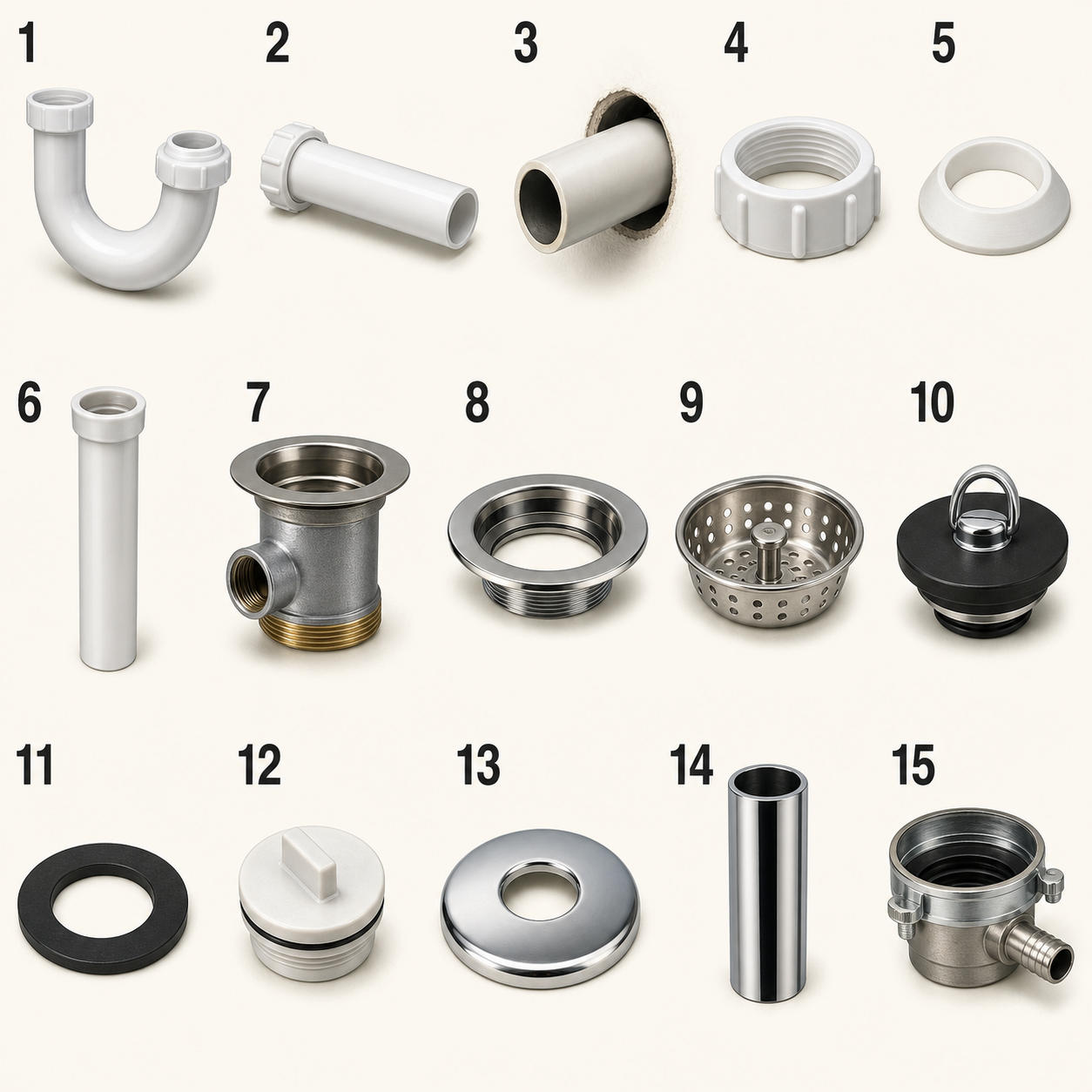
P-trap parts shown in the image
1. P-trap bend
The curved bend retains the water seal. Its size and material must match the fixture drain and applicable plumbing requirements.
2. Trap arm
The trap arm runs from the bend toward the wall drain. It needs the correct slope and cannot be arranged in a way that encourages siphoning.
3. Wall drain stub-out
This pipe projects from the wall and connects the fixture trap to the concealed branch drain.
4. Slip-joint nut
A slip nut tightens a removable tubular connection. It compresses a washer rather than sealing through the threads themselves.
5. Beveled slip washer
The tapered washer creates the seal as the slip nut is tightened. Its bevel faces the fitting it enters.
6. Tailpiece
The tailpiece is the straight tube descending from the sink drain or disposer outlet.
7. Sink drain body
The drain body passes through the sink opening and connects the visible flange to the pipe below.
8. Drain flange
The flange is the finished rim around the drain opening. Putty or an approved gasket seals it to the sink.
9. Strainer basket
A removable strainer catches food particles while allowing water to pass through.
10. Drain stopper
The stopper closes the drain so the basin can hold water. Kitchen and bathroom sinks use different stopper designs.
11. Reducing washer
A reducing washer adapts one tubular size to another at a slip-joint connection.
12. Cleanout plug
A cleanout plug provides access for clearing a blockage. Not every residential P-trap includes one.
13. Escutcheon
The escutcheon covers the rough opening where the trap arm enters the wall. It is mainly a finish component.
14. Extension tube
An extension tube adds vertical reach between the fixture tailpiece and trap. It should not create an unstable or overly complex assembly.
15. Disposal outlet connection
This outlet carries wastewater from a garbage disposal toward the trap. Its height affects whether the trap can be arranged correctly.
Why can a P-trap smell?
A trap can lose its water seal through evaporation, leakage, siphoning, or an incorrect vent arrangement. Odor may also come from residue in the drain, overflow passage, or disposal rather than from an empty trap.
Common mistakes
- A P-trap is not the same as a prohibited S-shaped trap arrangement.
- Slip-joint threads do not need thread-seal tape; the washer makes the seal.
- Two trap bends in series do not improve odor protection and can impair drainage.
- A flexible accordion drain can collect debris and may not be approved for the installation.
Persistent leaks, concealed damage, repeated sewer odor, or an incorrect drain and vent layout should be assessed by a qualified plumber.