
Parts of a Toilet Tank: 15 Components Explained
A gravity-flush toilet stores clean water in its tank. Pressing the handle opens the flush valve, water enters the bowl rapidly, and the fill valve then restores the tank and bowl water levels. The parts below work together during that cycle.
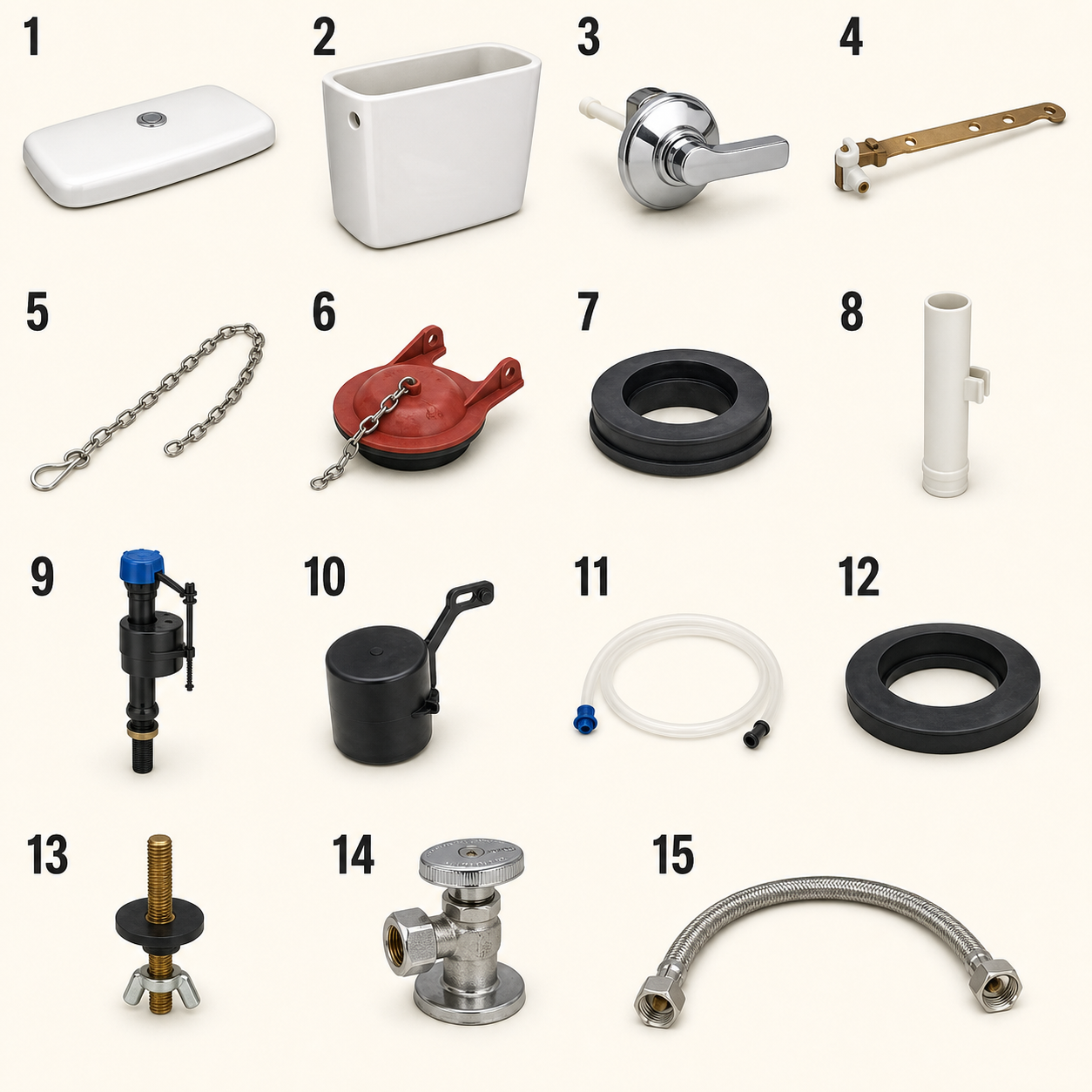
Toilet tank parts shown in the image
1. Tank lid
The removable porcelain lid protects the mechanisms and limits objects from falling into the tank.
2. Tank body
The tank stores the water released during a flush. A two-piece toilet bolts this tank to a separate bowl.
3. Flush handle
The handle is the user control. It rotates a lever inside the tank when pressed.
4. Trip lever
The trip lever transfers handle motion to the lift chain. Lever shape and mounting side vary by toilet model.
5. Lift chain
The chain raises the flapper. It needs a small amount of slack without becoming tangled or trapped beneath the flapper.
6. Flapper
The rubber flapper opens the flush valve and then reseats to refill the tank. Wear and mineral buildup can cause silent leaks.
7. Flush valve seat
The flapper seals against this opening. Damage or residue on the seat can prevent a watertight closure.
8. Overflow tube
The tube directs excess tank water into the bowl and sets an upper safety level below the handle opening.
9. Fill valve
The fill valve opens after a flush and shuts when the tank reaches its adjusted water level.
10. Float cup
The float rises with the water and signals the fill valve to close. Older toilets may use a float ball instead.
11. Refill tube
This small tube sends part of the refill flow into the overflow tube to restore the bowl's water level.
12. Tank-to-bowl gasket
A large rubber gasket seals the flush-valve outlet between the tank and bowl on a two-piece toilet.
13. Tank bolt
Bolts and rubber washers secure and seal the tank to the bowl. Uneven tightening can crack porcelain.
14. Shutoff valve
The stop valve on the wall or floor isolates the toilet's water supply.
15. Water supply line
The flexible connector carries pressurized water from the shutoff valve to the fill valve.
Common symptoms and likely areas
- Water runs into the bowl: inspect the flapper, chain, seat, and fill level.
- Tank fills very slowly: check the shutoff position, supply line, and fill valve.
- Handle must be held down: chain length, flapper buoyancy, or flush-valve compatibility may be involved.
- Water appears beneath the tank: stop using the toilet until the supply connection, bolts, gasket, and porcelain are inspected.
Replacement parts are not completely universal. Match the flush-valve diameter, handle position, fill-valve height, and toilet model. Porcelain cracks, damaged mounting surfaces, or persistent leaks require professional assessment.