
Parts of a Washing Machine: A Visual Guide
A front-loading washing machine fills, tumbles, drains, and spins by coordinating mechanical, electrical, and water-handling components. The illustration identifies 15 major parts found in many modern designs.
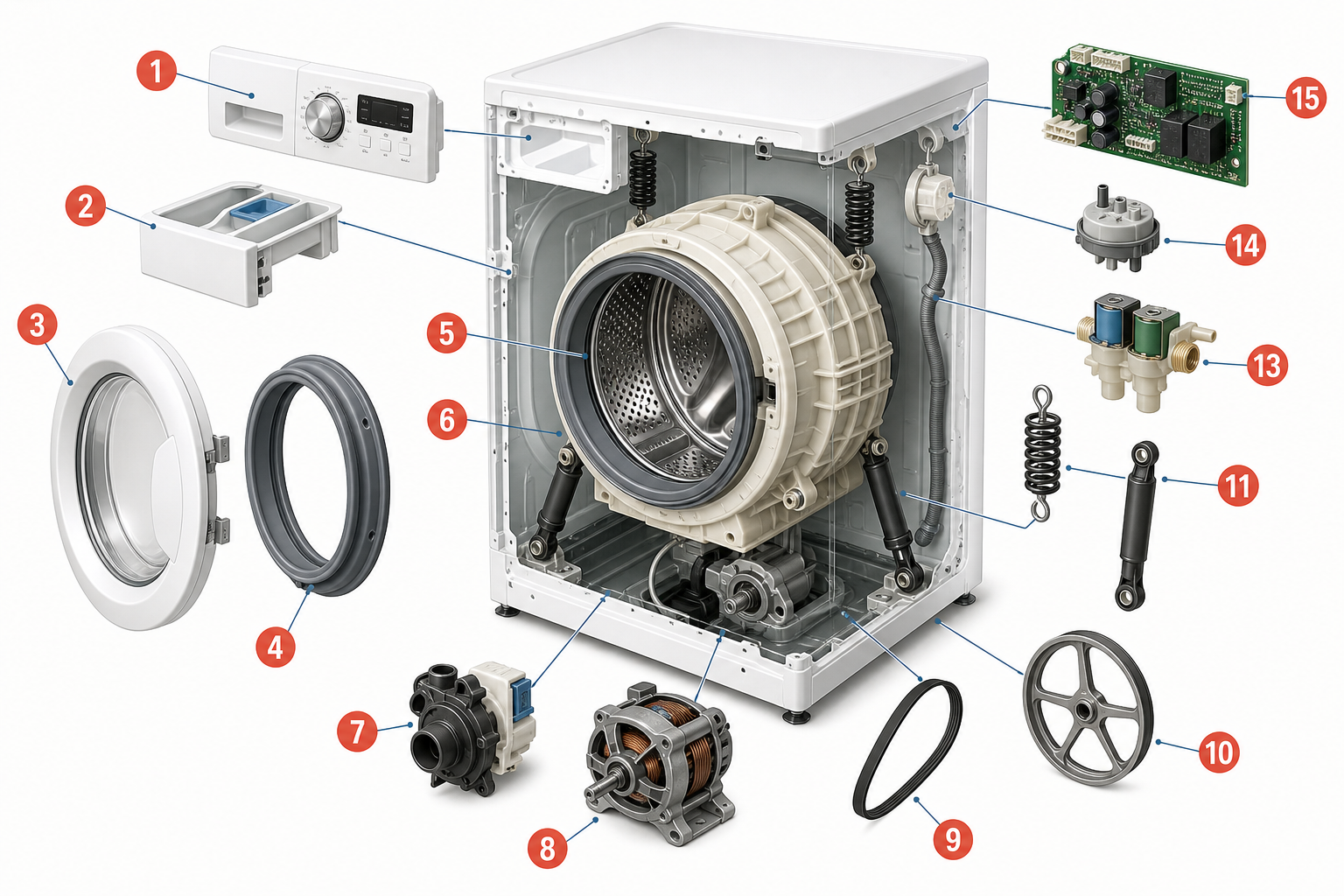
Washing machine parts shown in the image
1. Control panel
The control panel contains cycle selectors, buttons, and a display. It sends user choices to the machine's electronic controller.
2. Detergent dispenser
The dispenser meters detergent, softener, and other products into the wash at the appropriate stage of a cycle.
3. Door
The door provides access to the drum and includes glass or clear plastic for viewing. Its latch works with a safety interlock.
4. Door gasket
The flexible rubber bellows seals the gap between the moving tub assembly and the front cabinet. Debris or damage can cause leaks.
5. Inner drum
The perforated stainless-steel drum holds clothing. Water passes through its holes while internal lifters raise and drop the load.
6. Outer tub
The stationary outer tub surrounds the drum and contains wash water. Bearings and seals support the rotating drum at the rear.
7. Drain pump
The drain pump moves used water through the outlet hose. Many machines include a serviceable filter near the pump inlet.
8. Drive motor
The motor rotates the drum directly or through a belt and pulley. Speed changes allow gentle tumbling and high-speed extraction.
9. Drive belt
On belt-driven machines, the belt transfers motor rotation to the drum pulley. Stretching, wear, or misalignment can interrupt drum movement.
10. Drum pulley
The rear pulley is fixed to the drum shaft. Its large diameter helps translate motor speed and torque through the belt.
11. Shock absorbers
Shock absorbers limit rapid tub movement, especially during spin. Worn units can allow banging or excessive cabinet vibration.
12. Suspension springs
Springs support the tub assembly from above and allow controlled movement as the load shifts.
13. Water inlet valve
Electrically operated inlet valves open to admit hot or cold water. Screens at their hose connections help catch debris.
14. Pressure sensor
The pressure sensor estimates water level through air pressure in a small tube or chamber. Its signal helps prevent underfilling or overfilling.
15. Electronic control board
The control board coordinates valves, motor, pump, heater, locks, and sensors. A visible board problem does not prove it is the root cause; connected parts must also be tested.
Safety before inspection
Unplug the washer, close both water-supply valves, and follow the manufacturer's service procedure before removing a panel. Capacitors, sharp sheet metal, hot water, and heavy suspended tubs can create serious hazards.
Frequently confused parts
- Drum vs. tub: clothes sit in the rotating drum; the outer tub contains the water.
- Spring vs. shock absorber: springs carry weight; shocks control rapid movement.
- Control panel vs. control board: the panel is the user interface; the board manages machine operations.